
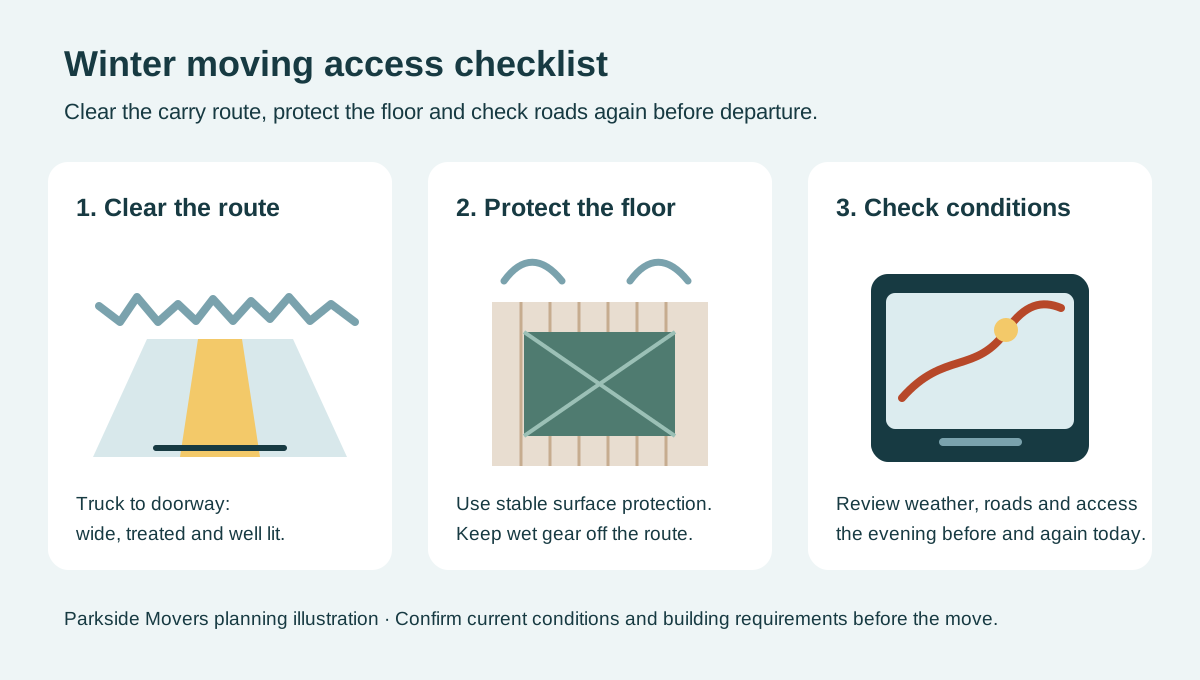
Start with the route from the truck to the room
For a winter move, check three separate things: the road to the property, the truck’s permitted stopping position, and the carrying route into the building. A passable road does not establish that a curb cut, driveway, step or loading dock is usable. Do this at the pickup and delivery addresses, including any storage stop.
Ask the mover what route and space its vehicle and handling equipment need. Photograph the current entrance and loading area, then measure narrow gates, steps and doorways where it is safe to do so. Do not plan on walking furniture over a snowbank because the ordinary path is blocked. The object that fits through a door in summer still needs a workable approach in winter.
Use a preparation timeline
Set preparation tasks around the move rather than assuming municipal or building clearance will coincide with the truck’s arrival. Name the person who will check each address and who can authorize a changed plan.
| When | Action | Confirmation to keep |
|---|---|---|
| When booking | Disclose stairs, outdoor carries, clearance limits and building hours. Ask about weather-related changes. | Written access scope, contacts and delay terms |
| Several days before | Arrange property clearing and building access; check the forecast and prepare essentials. | Clearing contact, elevator or dock reservation |
| The evening before | Check the approach and forecast again; confirm the receiving person and loading position. | Current photos and any revised instructions |
| Before dispatch | Recheck both properties and Ontario 511 where relevant. Tell the mover about ice, blocked access or a cancelled slot. | Agreed proceed, wait or reschedule decision |
| During loading and delivery | Keep checking slush, refreezing, falling snow and obstructions. | Update the onsite contact when conditions change |
Know which clearing job you are arranging
Toronto’s sidewalk guidance distinguishes public-sidewalk operations from private-property clearing. Do not assume that a public clearing pass includes a driveway, step, ramp, parking space or private dock. Check the City’s current instructions and arrange the property work with the owner or management.
Keep cleared snow off public roads, sidewalks and bike lanes. Choose a storage position that leaves the carrying route and exits usable. Elsewhere in the GTA, check the relevant municipality rather than applying Toronto’s rules to every address. This is a moving plan, not an assessment of your legal obligations.
Compare condo and house access
The objective is the same at either property: an authorized loading point and a clear, workable route. The people controlling that route may be different.
| Access question | Condo or apartment | House |
|---|---|---|
| Who coordinates clearing? | Ask management about the dock, service entrance and shared walkway. | Arrange the driveway, private path, steps and landing with the property contact. |
| Where can the truck stop? | Confirm dock dimensions and whether snow reduces usable clearance. | Confirm a lawful street or driveway position; allow for snowbanks and turning space. |
| What controls the timing? | Service-elevator reservation, loading hours and management access. | Key handover, receiver availability and readiness of the property. |
| What is the fallback? | Ask management whether another slot or approved entrance is available. | Ask the mover to assess another permitted loading position or revised time. |
| Who checks the destination? | An authorized receiver with building access. | A person with keys who can report actual conditions. |
Protect the entrance without making the floor slippery
Agree what floor protection the mover supplies and what the building requires. Use protection suitable for the surface and keep its edges secure and flat. A loose towel, curled runner or wet mat in a busy doorway can create another obstacle. Avoid a plan that requires crew members to repeatedly change footwear while carrying heavy items.
Set aside a place for wet personal footwear and keep spare dry materials available. Have an agreed person check tracked-in moisture and the entrance between carrying trips. Do not put a cleaning task in the crew’s path during a lift. Stop and address a slippery route rather than treating floor protection as permission to continue in unsafe conditions.
Agree a practical delay plan
Ask how the provider handles weather-related changes before moving day: who makes the operating decision, when you will receive an update, whether the crew waits or reschedules, and how additional charges are approved. Have the provider explain waiting, temporary holding, storage and redelivery separately; none is automatically included.
Example: pickup is ready, but the destination manager reports that the service ramp is iced over and the elevator slot is ending. Tell the mover before loading or dispatch where possible. Ask management about an alternative slot and get the mover’s revised delivery proposal in writing. Do not substitute an unapproved entrance or pressure the crew to continue over untreated ice.
Record the problem, the contact who confirmed it, the revised access window, the authorized receiver and the agreed costs. If possession deadlines are involved, contact the relevant property or legal adviser promptly; changing the moving appointment does not itself change those obligations.
Keep a winter essentials bag with you
Pack supplies that remain accessible even if the shipment is delayed. A first-night carton inside a loaded truck may not be available when you need it.
- Warm layers, gloves, dry socks and suitable footwear.
- Medication, identification, keys, chargers and essential documents.
- Food, water and daily supplies for children or pets where relevant.
- Mover, building and receiver contact details, plus the current agreement.
- A plan for accommodation and personal travel if furniture arrives later.
Send the final access update before the crew travels
A useful message is specific: “The front steps are clear, the driveway entrance is narrowed by a snowbank, and the receiving contact can open the building at the agreed time.” Include current photos when safe, and say which conditions remain unresolved. Avoid a general “all clear” if only one part of the route has been checked.
For Parkside Movers, send both addresses, your inventory, date preferences and winter access details through the quote form. Ask what preparation is expected and confirm the written scope. This guide does not promise snow-clearing services, a weather-proof delivery time or that every winter route will be available.
Planning a move?
Tell us what you need moved and share any access details for a quote.
Request a quoteExplore house moving ↗