
Check the forecast and alerts, then make a decision
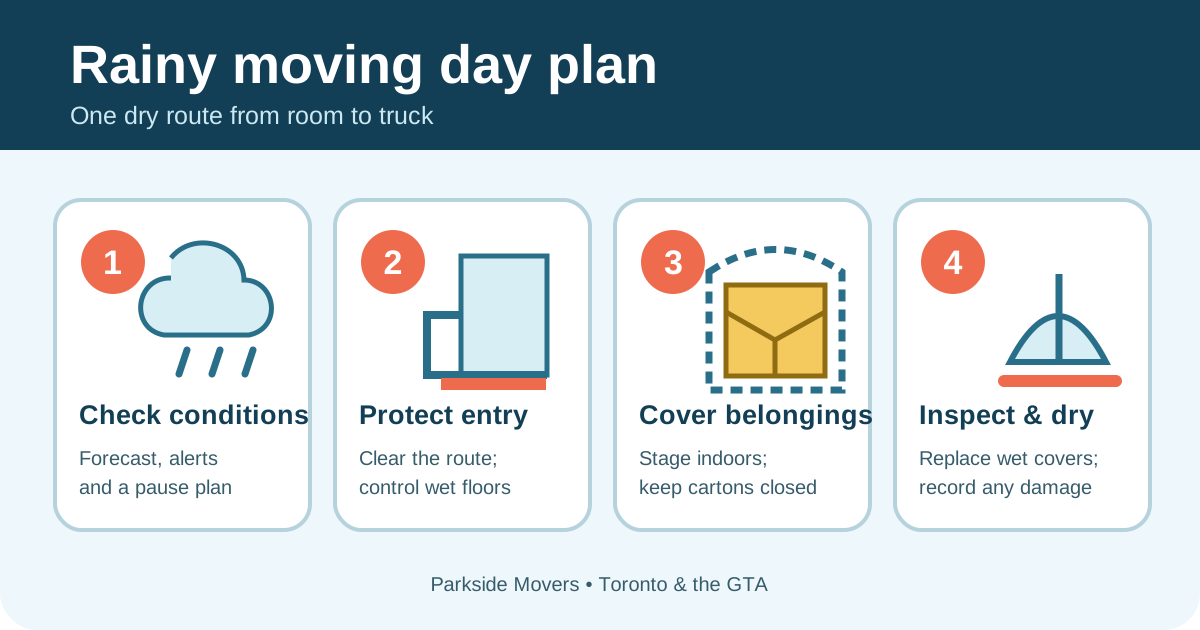
Review Environment and Climate Change Canada's local forecast and active alerts the evening before the move and again before loading. WeatherCAN provides official forecasts, precipitation radar and alerts. Read the full alert for the affected place and time instead of relying on an icon in a general weather app.
A shower is usually a preparation problem; a warning involving flooding, damaging wind, lightning or unsafe travel can be a stop-work problem. Confirm who will decide whether to delay, pause or change the order of work. Reconfirm the arrival window, elevator booking and legal loading location if weather affects access.
Create one protected route at each property
Walk the route before the first item moves. Clear clutter, identify pooled water, secure loose mats and improve lighting. Use appropriate floor protection that lies flat and will not slide on the actual surface. Protect the doorway without creating a raised edge that catches a dolly or a person's foot.
CCOHS identifies wet surfaces, obstacles and poor housekeeping as common slip and trip factors. Assign someone to monitor the entrance, replace saturated protection and mark a wet area until it is dry. Keep children, pets and visitors away from the active carry path.
Protect belongings without trapping moisture
Tell the crew about unfinished wood, art, paper records, mattresses and electronics so the loading order can reflect their sensitivity. A thin plastic sheet is not a substitute for a rigid carton or proper furniture protection, and wrapping must not create an unsafe grip.
- Close and label cartons before they leave the home.
- Use fitted covers or wrapping appropriate to the item and keep openings away from rain.
- Stage goods indoors; do not build an uncovered sidewalk pile.
- Carry electronics and absorbent furniture only when the next protected space is ready.
- Keep dry towels and replacement floor protection accessible.
- Do not put wet padding into long-term storage with furniture.
Slow down at the truck and stairs
Rain changes traction, visibility and the way grips feel. Use footwear suited to the conditions, keep steps visible and avoid rushing to shorten an item's exposure. CCOHS recommends suitable footwear, a clear view of the route and a pace appropriate to the task. Heavy or awkward goods still need enough people and the right handling equipment.
Keep ramps, lift gates and truck floors as dry and clear as practical. Do not run extension cords through water or improvise around a flooded loading area. If wind catches a large flat item or lightning is close enough to make outdoor work unsafe, move people to safety and reassess rather than trying to finish one more trip.
Inspect at delivery and record problems
Choose a dry staging area at the destination. Check cartons and coverings as they come inside, isolate anything wet and photograph a problem before discarding packaging. Follow the manufacturer's advice before powering wet electrical equipment. Ventilate or dry damp materials promptly and seek appropriate help when water has entered a wall, appliance or upholstered item.
For a Parkside Movers quote, disclose exposed walking distances, stairs, underground-clearance limits and any area known to collect water. Weather cannot be controlled, but a written access plan, protected route and clear pause decision make a wet-day move easier to manage.
Planning a move?
Tell us what you need moved and share any access details for a quote.
Request a quoteExplore house moving ↗