
Reduce the load before packing day
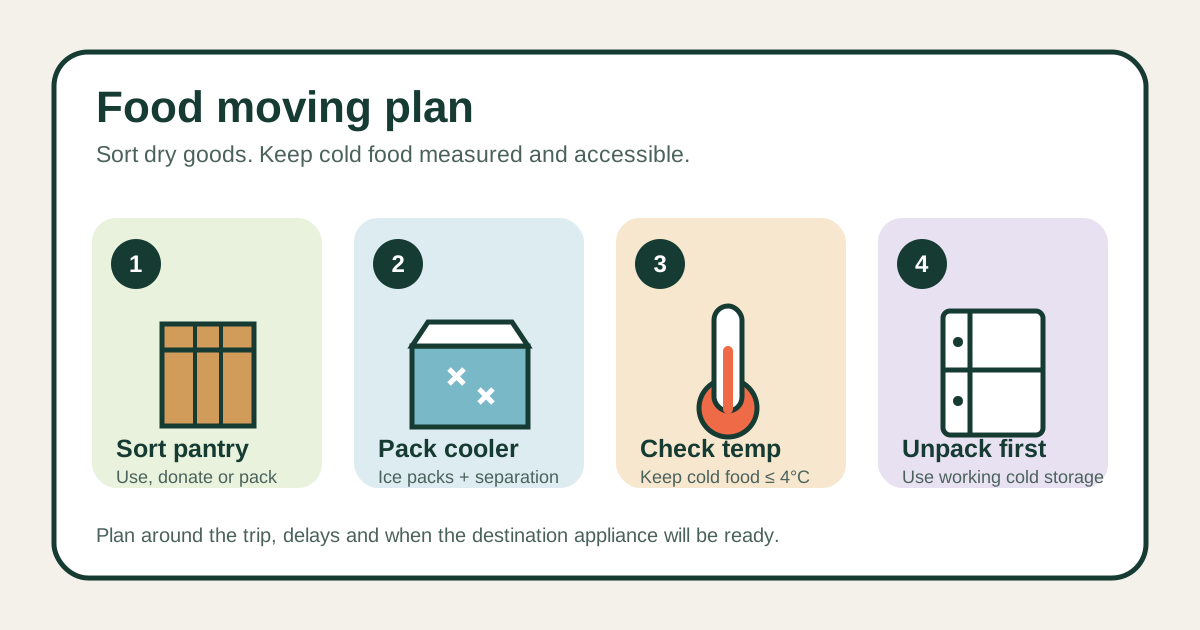
Inventory the pantry, refrigerator and freezer at least one or two weeks before the move. Plan meals around open, fragile and frozen products. Donate only unopened, in-date food that a receiving organization confirms it accepts; never leave unapproved food outside a donation location. Dispose of spoiled or leaking items through the appropriate local stream.
Do not expect the moving truck to act as refrigerated storage. Separate food you will personally transport from dry pantry goods that may be included in the agreed moving load. Parkside does not assess whether food remained safe to eat, so the customer must plan, monitor and control the cold chain.
Pack the pantry by risk and weight
Check best-before or expiry information as appropriate, wipe containers and discard anything with a broken seal, pest evidence or leakage. Place oils, sauces and other permitted liquids upright in sealed secondary containment. Keep cleaning products and chemicals completely separate from food. Pack glass jars with cushioning so they cannot strike one another.
Use small cartons for cans, jars and dense staples. Fill gaps so containers do not shift, but keep each box within a safe handling weight. Label contents and the destination cupboard on two sides. Keep essential water, snacks and dietary or medical foods with the household rather than deep in the moving load.
Build a measured cold-food plan
Health Canada says a refrigerator should be at 4°C or lower and a freezer at -18°C or lower. It identifies 4°C to 60°C as the temperature danger zone where bacteria can grow quickly. Use clean insulated coolers with ice or frozen gel packs and a food thermometer; keep raw meat, poultry, fish and seafood sealed and separate so juices cannot contaminate other food.
Pre-chill the cooler, add food at the last practical moment and open it as little as possible. Do not place loose food beside household goods or depend on outdoor weather to maintain a safe temperature. The route, delays, vehicle temperature and time before the destination appliance is ready all belong in the plan.
Load last and unpack first
If you cannot confirm that perishable food remained at a safe temperature, follow current Health Canada or local public-health advice. Smell and appearance are not reliable safety tests. When in doubt about a specific product, discard it safely rather than guessing.
- Keep coolers upright, stable and accessible to the person monitoring them.
- Do not bury cold food behind furniture or place heavy items on a cooler.
- Keep raw products in sealed containers below or apart from ready-to-eat food.
- Record the departure temperature and check again on arrival.
- Put cold food into a working refrigerator or freezer immediately.
- Use a first-night food plan that does not depend on a delayed appliance connection.
Coordinate food with appliance preparation
Empty food before the refrigerator or freezer is unplugged and prepared. Follow the model's manual for defrosting, cleaning, drying, securing parts and waiting before restart. Keep cooler plans independent of an uncertain delivery or appliance-settling time.
For a Parkside quote, list the appliances and disclose any boxed pantry goods, glass or permitted liquids. Food cooling, monitoring and safety remain the customer's responsibility. Keep the first-night essentials box separate so medication, chargers, toiletries and important documents never share a container with melting ice or food.
Planning a move?
Tell us what you need moved and share any access details for a quote.
Request a quoteExplore house moving ↗